

Ultimate SEO Expertise
Partner with Us Today for FreeIs SEO a one-time effort, or does it require ongoing work?
Search engine optimisation (SEO) is often misunderstood as a one-time task with immediate results. However, the reality is quite different. SEO is a continual process that evolves alongside changing search engine algorithms, competitor activity, and user behaviour. Understanding this ongoing nature is essential for businesses seeking lasting online success.
When embarking on SEO efforts, it is important to set realistic expectations. Initial improvements may be seen within a few months, but sustained growth requires persistent attention. Companies that discontinue their optimisation efforts risk losing rankings and traffic over time.
SEO is not simply about ticking boxes once. It involves constant monitoring, updating content, improving technical aspects, and adapting strategies to remain competitive. Search engines favour websites that demonstrate relevance and authority through continuous refinement.
Regularly producing fresh, high-quality content keeps a site engaging and signals to search engines that it remains active and valuable. Technical optimisations, such as improving site speed and mobile usability, also demand ongoing assessment. Furthermore, tracking performance data allows for informed adjustments to enhance outcomes continually.
An effective SEO strategy acknowledges that results accumulate over time rather than appearing instantly. While initial gains can be encouraging, the real success lies in sustained effort and long-term commitment to optimisation. This approach builds credibility, attracts consistent traffic, and drives meaningful business growth.
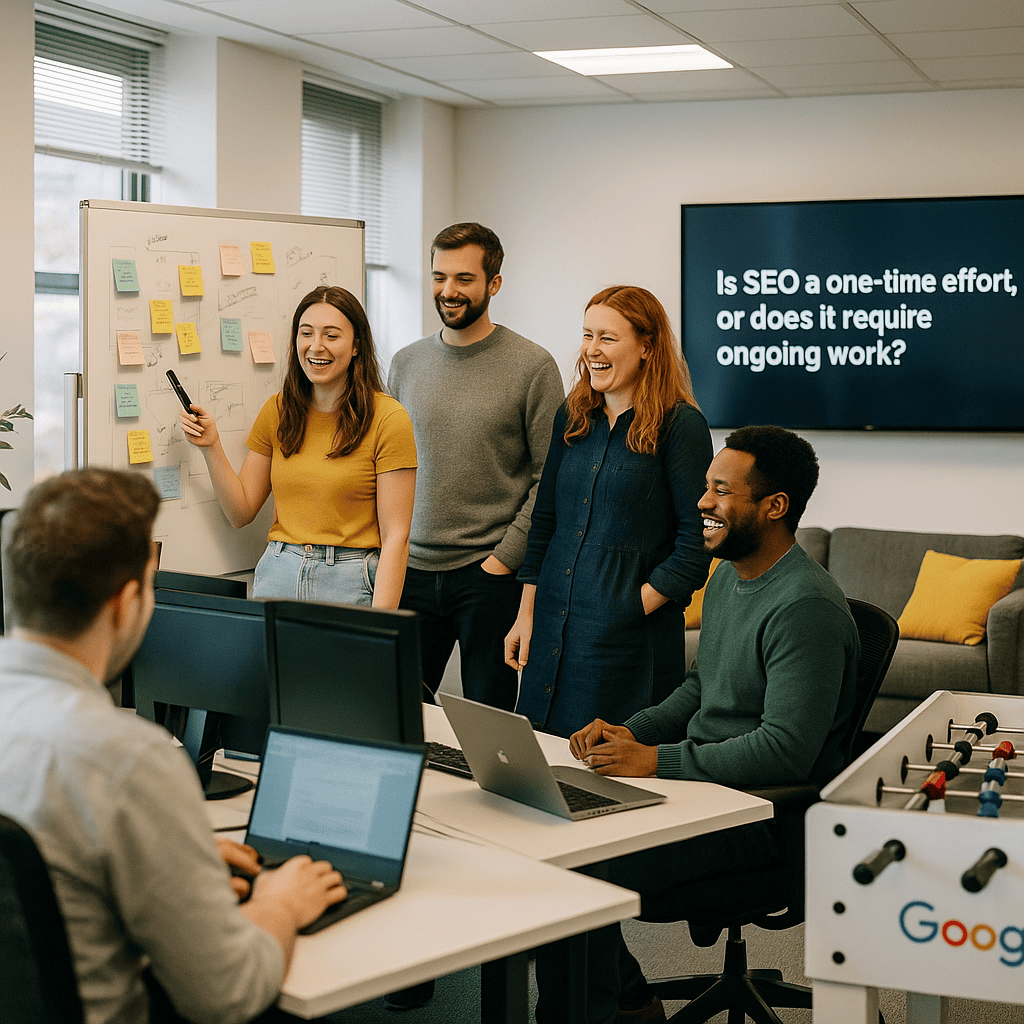
In conclusion, SEO must be viewed as a continuous journey rather than a one-off project. Ongoing work ensures a website stays aligned with evolving search criteria and audience needs. Embracing this mindset positions businesses to reap enduring benefits from their SEO investments. Ultimately, persistent and well-informed optimisation efforts are the key to lasting online visibility and success.
Committed to Your Ongoing SEO Success?
Partner with us for continuous optimisation strategies that drive lasting results and keep your business ahead in search rankings. Let’s ensure your SEO efforts never lose momentum.
Request a Partner Consultation